
Sell surplus to the grid
Net Metering
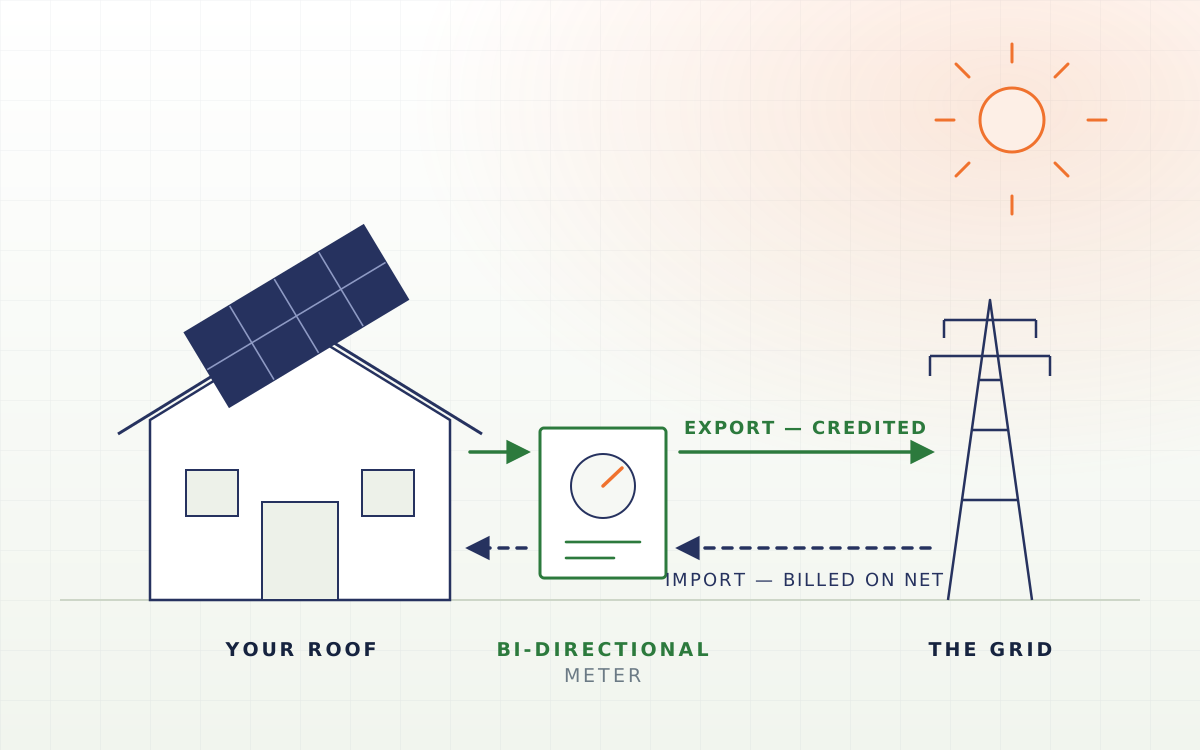
Under Bangladesh's Net Metering Guidelines, the surplus your roof exports is credited against what you import. We handle the design, the paperwork and the utility.
- Designed for
- Any grid-connected rooftop system owner
- Typical capacity
- Up to 70% of sanctioned load
- Indicative payback
- Improves payback by 1 – 2 years
The case
A rooftop array almost always generates more than the building consumes at midday and less than it consumes after sunset. Net metering resolves that mismatch: a bi-directional meter records both flows, and you are billed only on the net.
Bangladesh adopted its Net Metering Guidelines in 2018, and they apply across the distribution utilities — DPDC, DESCO, BPDB, REB, WZPDCL and NESCO. Eligible customers may install a system up to 70% of their sanctioned load, and unused export credit rolls forward month to month.
The technical requirements are straightforward but the administration is not. Application forms, single-line diagrams, equipment test certificates, licensed-electrician certification, inspection scheduling and meter replacement all have to line up. We do that work as part of the installation.
At a glance
- Guideline
- Net Metering Guidelines, Bangladesh
- Size ceiling
- 70% of sanctioned load
- Meter
- Bi-directional, utility-supplied
- Credit
- Rolls forward monthly
- Utilities
- DPDC, DESCO, BPDB, REB, WZPDCL, NESCO
- Typical approval
- 4 – 10 weeks
Why it pays
What you actually get
Nothing is wasted
Midday surplus becomes credit instead of being clipped or curtailed. Every kWh the roof makes has value.
Credits roll forward
Export credit carries over between billing periods, so a strong dry season offsets a weak monsoon.
No batteries required
The grid acts as your storage. This removes the single most expensive component from the system.
We handle the utility
Application, single-line diagram, test certificates, inspection and meter changeover are all managed for you.
The process
From first call to handover
-
01
Eligibility check
We confirm your sanctioned load, tariff category and utility, then size the array within the 70% ceiling.
-
02
Application
Forms, single-line diagram and equipment certificates prepared and filed with your distribution utility.
-
03
Inspection
We accompany the utility inspection and resolve any observations on the spot.
-
04
Meter changeover
The utility installs the bi-directional meter and export credit begins accruing.
Questions
About net metering
Up to 70% of your sanctioned load under the national guidelines. If your sanctioned load is 10 kW, the ceiling is 7 kWp. If you need more, the sanctioned load itself can sometimes be revised upward first.
Not directly. Export is credited in kWh against your import and settled on your bill. Credit rolls forward rather than being paid out, which is why we size systems to consumption rather than to roof area.
Typically four to ten weeks from filing, depending on the utility and how complete the submission is. Getting the documentation right first time is the main lever on that timeline.
Also from us