
For homes & apartments
Residential Rooftop Solar
Turn an unused rooftop into a power plant. Cut your monthly bill, ride through load-shedding, and add nothing to the country's carbon load.
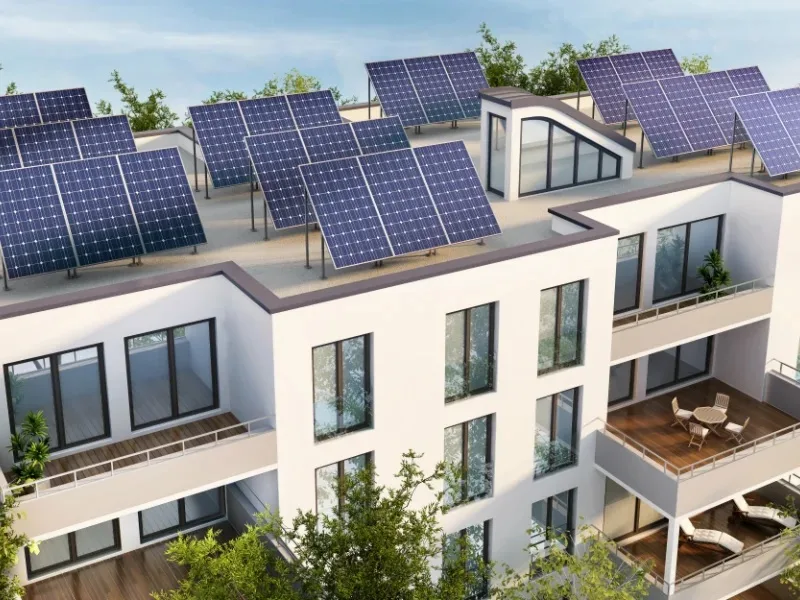
- Designed for
- Homes, duplexes and apartment buildings
- Typical capacity
- 1 – 20 kWp
- Indicative payback
- 4 – 6 years
The case
Your roof is the most under-used square footage you own. In Bangladesh it receives roughly 4–5 kWh of solar energy per square metre every single day — energy you are currently paying DESCO, DPDC or PDB to replace.
A Solar Masters residential system is engineered around how your household actually uses power: the evening cooking load, the air-conditioning peak, the pump, the lift. We size the array to that curve rather than to a brochure number, so you are not paying for capacity you will never draw.
Every installation is structurally surveyed before a single rail is fixed. We verify roof loading, wind uplift and shading across the full solar year, then hand you a system that quietly does its job for the next twenty-five.
At a glance
- Typical size
- 3 – 10 kWp
- Roof area needed
- ~9 m² per kWp
- Panel warranty
- 25-year performance
- Inverter warranty
- 5 – 10 years
- Install time
- 2 – 5 days
- Monitoring
- Mobile app, live
Why it pays
What you actually get
A visibly smaller bill
Daytime consumption is served by the roof first. Most households see 40–70% of their monthly electricity charge disappear, depending on load pattern and array size.
Power through the outage
Paired with battery storage, essential circuits — lights, fans, router, refrigerator — stay live when the grid drops.
Almost nothing to maintain
No moving parts. A wash during the dry season and an annual inspection is the entire maintenance burden.
Property that is worth more
A documented, warrantied generation asset on the roof is a permanent addition to the building's value.
The process
From first call to handover
-
01
Roof & load survey
We measure usable roof area, orientation, shading and structural capacity, and read twelve months of your bills.
-
02
System design
You receive an array layout, a projected generation curve, a bill-of-materials and a financial model — before you commit.
-
03
Installation
Mounting, DC and AC wiring, inverter commissioning and earthing, typically completed in two to five days.
-
04
Handover & monitoring
Live monitoring on your phone, full documentation, and a warranty pack you can actually claim against.
Questions
About residential
Yes, at reduced output. Panels generate from diffuse light as well as direct sun, so an overcast day typically produces 30–50% of a clear-day yield. Annual system sizing already accounts for Bangladesh's monsoon months.
Not necessarily. If your goal is a lower bill, a grid-tied system with net metering is the cheaper route. Batteries are for backup during outages — we usually recommend sizing them only for essential circuits.
It stays. Solar supplements the grid rather than replacing it; the changeover is seamless and invisible to your appliances.
Also from us