
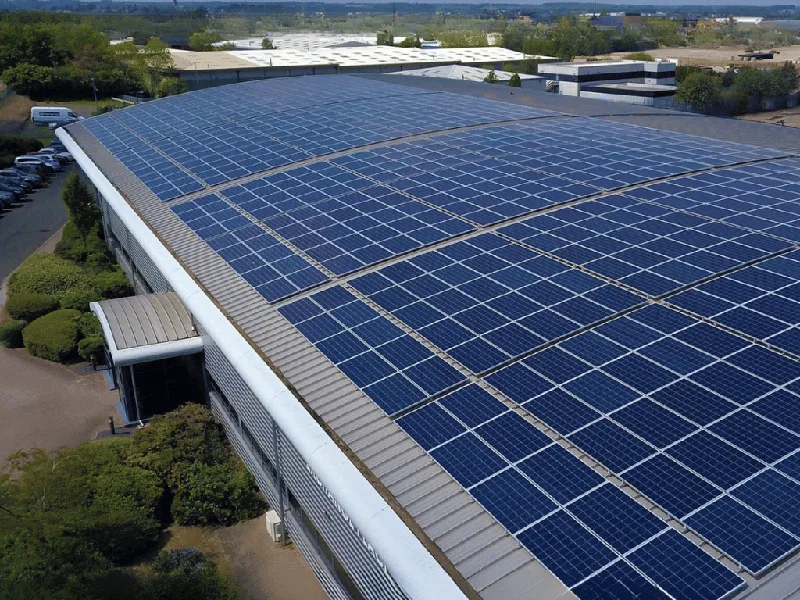
For a decade the pitch for industrial solar in Bangladesh was purely financial: cut the electricity bill, recover the capital in four or five years. That argument still holds. It is no longer the argument that closes the deal.
The buyer audit changed the maths
Apparel buyers now audit their suppliers' Scope 2 emissions — the emissions embedded in purchased electricity. Higg FEM submissions, LEED certification and buyer-specific decarbonisation targets all require a supplier to demonstrate, with data, where its power came from.
Grid electricity in Bangladesh carries a carbon intensity you cannot argue down. On-site generation is the only lever a factory directly controls, and a metered solar array produces exactly the kind of evidence an auditor accepts: continuous generation data, tied to a specific meter, at a specific site.
That reframes the investment. It is no longer only an energy cost decision made by the finance director. It is increasingly a commercial-continuity decision made alongside the buyer relationship.
Why factory roofs are unusually good sites
Three things line up in industry that rarely line up elsewhere:
Load matches resource. A factory draws hardest between 09:00 and 17:00. That is precisely the generation window. Self-consumption approaches 100%, which means every kWh generated is valued at the full retail tariff rather than at export credit.
The roof is enormous and already there. A typical shed roof offers tens of thousands of square metres of unshaded, correctly oriented, structurally engineered surface with no competing use.
The tariff is high and rising. Industrial tariffs have moved upward repeatedly. Each revision improves the return on an array already installed — the asset gets better with time, which is unusual.
The structural question comes first
The most common early concern is roof loading. A modern array adds roughly 12–15 kg/m² including structure. Most purpose-built industrial sheds carry this comfortably, but most is not all, and the assessment has to happen before design rather than after.
We look at:
- Purlin spacing, section and condition
- Truss capacity and existing load
- Sheet type, gauge and fixing condition
- Wind uplift for the site's exposure category
- Remaining roof life — if the sheeting needs replacing in five years, replace it first
Where capacity is marginal, options include lighter aluminium structures, ballasted layouts that spread load, reduced array density, or targeted reinforcement.
Diesel displacement is the underrated line item
Most factories run diesel generators during grid interruptions. Every kWh the solar array supplies during daylight interruptions is a kWh the generator does not burn fuel to make.
This rarely appears in a standard payback model because it is harder to quantify than the tariff saving. On sites with frequent daytime interruption it can be a substantial share of the total return — and it also reduces generator run-hours, which reduces maintenance.
What a serious proposal contains
If you are evaluating industrial solar, the proposal should include:
- A load profile built from actual half-hourly or monthly consumption data, not an assumption
- A structural assessment report
- Single-line diagrams with protection coordination
- Generation modelling against site-specific irradiance data
- An IRR and payback model with stated tariff-escalation assumptions
- Net-metering eligibility analysis against sanctioned load
- A defined O&M scope with performance reporting
Anything shorter is a price, not a proposal.
Solar Masters delivers turnkey industrial EPC with structural assessment, utility approvals and ongoing O&M. Talk to our engineering team.