
Irrigation in Bangladesh runs largely on diesel. For a boro-season farmer, fuel is typically the single largest cash outlay of the crop cycle — and unlike seed or labour, it is a cost that recurs every time the pump runs.
Solar pumping changes the structure of that cost rather than reducing it at the margin.
The comparison that matters is seasonal, not per-hour
Diesel pumping costs are usually discussed per hour of running. That understates them, because the real cost includes:
- Fuel at the pump, at whatever the price is that week
- Transport of fuel to the field, which is real time and real money
- Servicing — oil, filters, injector work, and the engine rebuild that eventually arrives
- Downtime — hours lost when the engine will not start during a critical irrigation window
- Loss — fuel that does not reach the pump
A solar system replaces all of these with a single capital cost and an annual clean.
Where the resource and the demand line up
Solar irrigation has an advantage that rooftop solar does not: the demand curve and the resource curve are the same curve.
Irrigation demand in Bangladesh peaks in the dry months before harvest — exactly when irradiance is highest and cloud cover is lowest. You need the most water when the sun is strongest. There is no seasonal mismatch to engineer around.
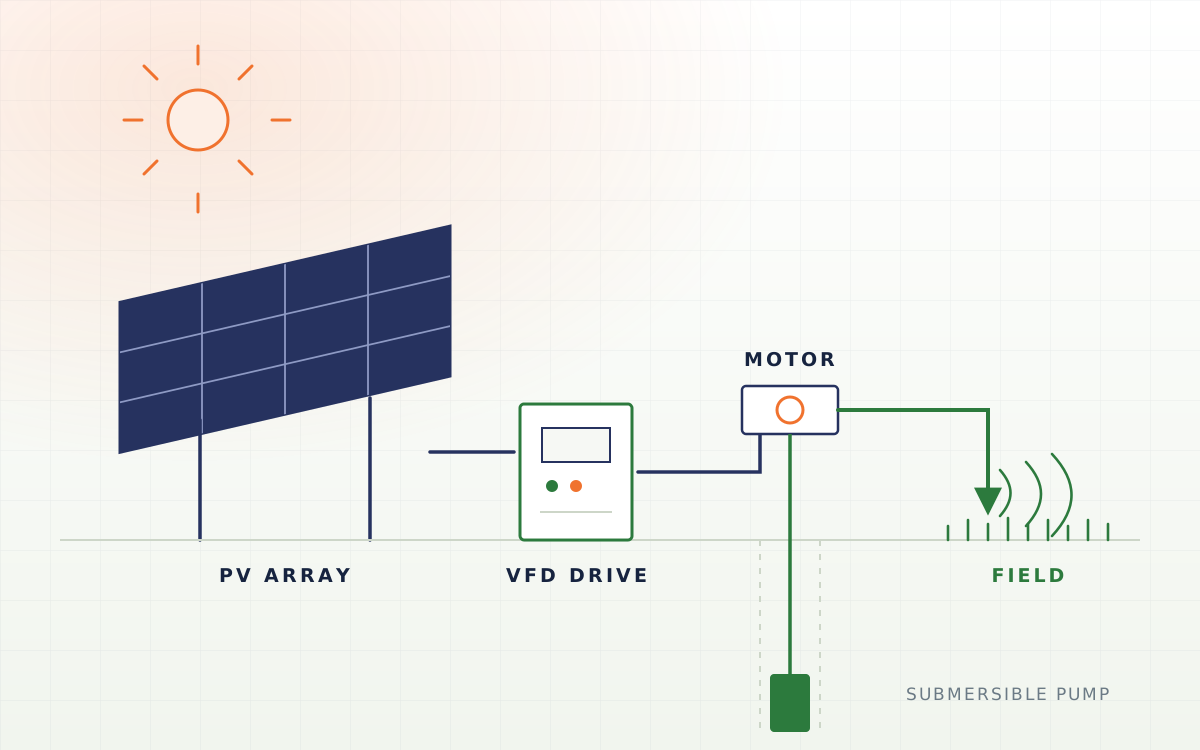
What a solar pumping system consists of
- Array — fixed-tilt, or seasonally adjustable for a modest yield gain
- VFD controller — the important component; it modulates pump speed to track available irradiance rather than cutting out when a cloud passes
- Pump — surface or submersible, sized against head and required daily volume
- Structure and civil work — foundation and mounting, sized for the site's wind exposure
Systems from 1 HP up to 50 HP cover the range from a household vegetable plot to a shared community scheme.
Sizing: the worst month, not the average
The error we see most often is sizing against average conditions. A pumping system has to deliver required volume during the worst irrigation month in the cycle, not the mean.
That requires four figures:
- Required daily water volume for the command area
- Total head, static plus friction
- Available irradiance in the critical month
- Acceptable pumping hours per day
Get these right and the system delivers through the season. Get them wrong and it works beautifully in March and fails you in the week that matters.
Night irrigation and storage
Solar pumps do not run after dark, and batteries are rarely worth their cost for irrigation.
The standard answer is water storage rather than electrical storage: an overhead tank or a reservoir filled during daylight and drawn down whenever you need it. Water is far cheaper to store than electricity, and a tank has no replacement cycle.
Financing
IDCOL has operated refinancing programmes for solar irrigation pumps in Bangladesh, and various schemes for agricultural renewables come and go. Availability varies by year and by programme, so it is worth checking what is currently open at the time you commit rather than relying on what was available last season.
We survey water table, head and command area before sizing anything, and train operators in Bangla at handover. Arrange a site survey.